ISO 9001 Certified | Precision Laser Systems for 90+ Countries Request a Consultation

Trotec Laser Technology

An engineering-driven approach to laser processing. Explore the core technologies, optical systems, and control architectures that define Trotec's precision advantage.

Trotec CO2 laser source technology
Core Technology

CO2 Laser Sources

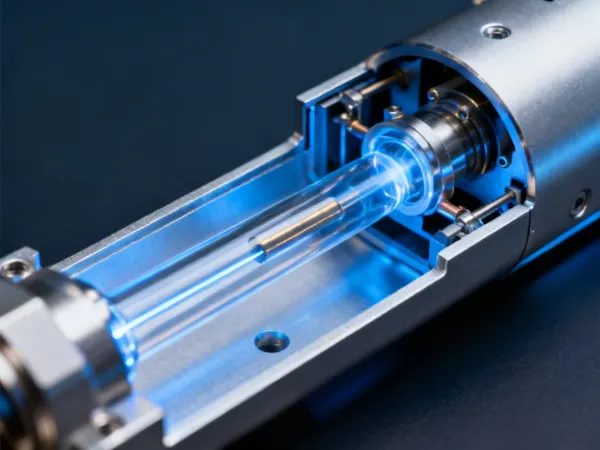
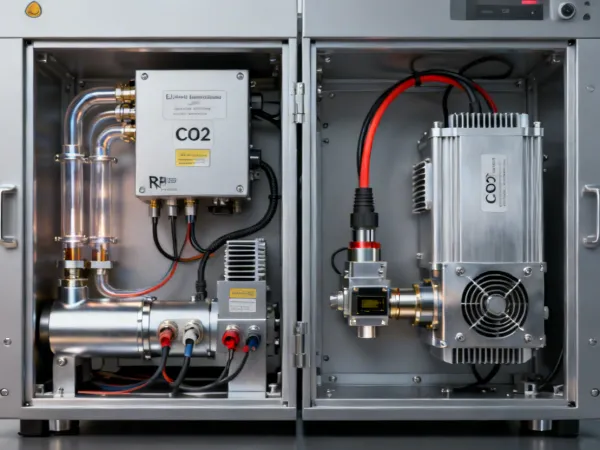
Trotec employs sealed CO2 laser tubes operating at 10.6 micrometers wavelength, the optimal absorption band for organic materials. Our sources maintain beam quality (M-squared below 1.2) throughout their rated lifetime of 20,000+ operating hours, minimizing focal spot drift and ensuring consistent processing results over extended production campaigns.

10.6 μm Wavelength
20,000+ hrs Source Lifetime
< 1.2 M² Beam Quality

Limitation: CO2 lasers cannot process bare metals without surface coatings. For direct metal marking, our fiber laser platform (1064nm) is the appropriate solution.
Trotec fiber laser marking technology
Marking & Metal Processing

Fiber Laser Systems

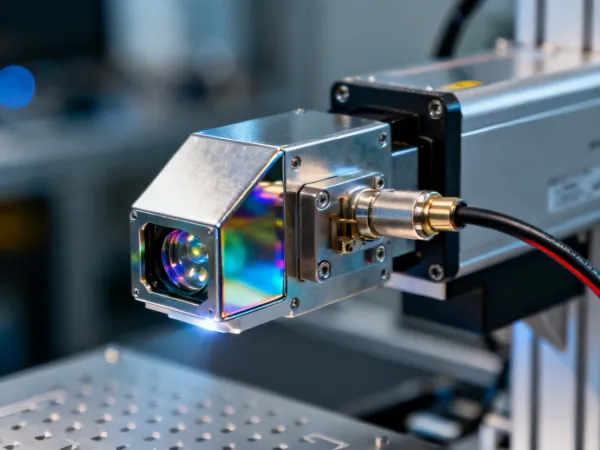
Our fiber laser platforms operate at 1064nm wavelength, delivering focused spot sizes down to 20 micrometers for high-resolution metal marking. The solid-state design eliminates consumable gas requirements and provides maintenance-free operation for industrial environments. Pulse durations from 4ns to 200ns enable both surface annealing and deep engraving modes.

1064 nm Wavelength
20 μm Min. Spot Size
4-200 ns Pulse Range

Trade-off: Fiber lasers produce narrower kerf widths but slower linear speeds on thick organic materials compared to CO2 sources. Material thickness above 3mm on organics is typically more efficient with CO2.

Trotec flexx dual-source laser technology
Dual-Source Innovation

Flexx Technology

Flexx integrates both CO2 and fiber laser sources within a single platform, enabling operators to switch between organic and metallic material processing without workpiece repositioning. The optical path shares common focusing optics while maintaining independent source control, allowing sequential CO2 cutting followed by fiber marking in a single job file.

  • Single-platform organic cutting and metal marking
  • Shared focal plane eliminates realignment between sources
  • Software-controlled source switching within job files
  • Reduces capital expenditure versus separate CO2 and fiber systems

Consideration: Flexx systems use the same work area for both sources. Dedicated high-power CO2 cutting applications above 120W may still benefit from a purpose-built SP series platform.

Trotec precision motion control system
Motion & Control

Precision Motion Systems

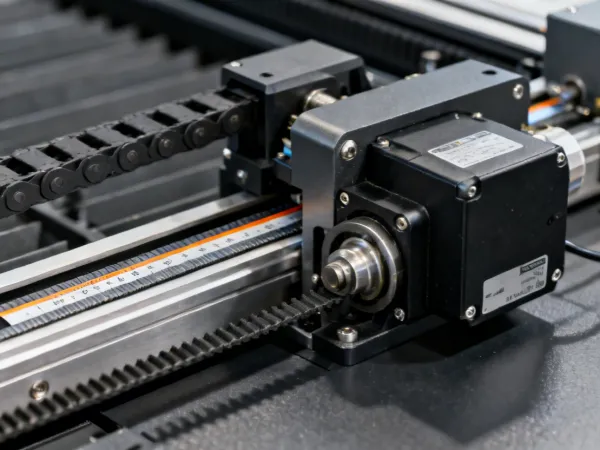
Trotec gantry systems employ linear encoder feedback with 5-micrometer resolution, enabling closed-loop position control that compensates for belt stretch and thermal expansion in real time. The servo architecture achieves acceleration rates up to 5.1 G, translating to measurable throughput advantages on complex geometry jobs with frequent direction changes.

±0.01 mm Positioning Accuracy
5.1 G Max Acceleration
4.2 m/s Max Speed

Ruby Software Platform

Purpose-built workflow software connecting design preparation, parameter management, and production execution in a unified interface.

Design Import

Native support for AI, SVG, DXF, PDF, and bitmap formats. Automatic layer-to-parameter mapping reduces manual setup for multi-operation jobs.

Material Database

Pre-validated parameter sets for 200+ material combinations. Each entry includes speed, power, frequency, focus offset, and air assist pressure.

Vision Registration

Camera-based alignment for printed media processing. Automatic fiducial detection compensates for print-to-cut registration errors up to 2mm.

Production Integration

REST API and TCP/IP interfaces enable MES integration. Job status, cycle count, and error logging available for automated production environments.

Quality Assurance Protocol

Every Trotec system undergoes a documented multi-stage testing protocol before leaving our 70,000 m² production facility in Marchtrenk, Austria. This process was formalized in 2000 when we achieved ISO 9001 certification and has been refined continuously since.

Step 1

Component Inspection

Incoming laser sources undergo beam profile measurement using a Coherent BeamMaster Plus profiler. M-squared values above 1.2 are rejected. Optics are verified to λ/10 surface accuracy using interferometry. Rejection rate at this stage: approximately 2.1% of incoming sources (2024 data).

Step 2

Mechanical Calibration

Gantry positioning accuracy is measured at 25 reference points across the work area using a Renishaw XL-80 laser interferometer. Each axis must achieve ±0.01mm repeatability. Belt tension and encoder alignment are adjusted until all points pass.

Step 3

Processing Validation

Each machine runs a standardized test pattern on five reference materials (3mm acrylic, 0.5mm birch plywood, anodized aluminum, ABS plastic, stainless steel 304). Results are photographed and compared against master samples. Edge quality, mark contrast, and dimensional accuracy are measured.

Step 4

Burn-In & Documentation

Systems run continuously for 48 hours at rated power, monitoring laser power stability, thermal drift, and exhaust system performance. The machine ships with a serialized test certificate documenting all measurements from Steps 1-3.

Customers can request sample processing on their specific materials before purchase. Trotec operates application laboratories in 14 countries where engineers run feasibility tests and provide documented parameter recommendations at no charge.

Laser Source Selection Guide

Selecting the correct laser source depends on your material type, required mark contrast, processing speed, and budget constraints. The table below summarizes key decision criteria.

Parameter CO2 Laser Fiber Laser Flexx (Dual)
Wavelength 10.6 μm 1064 nm Both
Best For Organics, plastics, textiles Metals, hard plastics Mixed-material workflows
Cutting Capability Up to 25mm (material dependent) Thin metals (<2mm) Both ranges
Mark Permanence on Metal Surface only (coating removal) Permanent (annealing/engraving) Permanent
Maintenance Interval Optics cleaning every 40-80 hrs Minimal (solid-state) CO2 optics + fiber minimal
Typical Applications Signage, awards, packaging Traceability, industrial marking Personalized products, mixed media

Frequently Asked Technology Questions

Honest answers to the questions our application engineers hear most often—including the ones where the answer is not straightforward.

This is the most common question in the laser processing industry, and there is no universal answer. The correct source depends entirely on your primary material and application.

The case for CO2 (10.6μm): Organic materials—wood, acrylic, leather, textiles, paper—absorb 10.6μm wavelength efficiently. CO2 lasers produce wider kerf widths (typically 0.15-0.3mm) and handle thick materials (up to 25mm acrylic) that fiber lasers cannot process at comparable speeds. For signage shops, packaging converters, and textile fabricators, CO2 remains the workhorse. Limitations include higher maintenance requirements (optics cleaning every 40-80 operating hours) and the inability to mark bare metals.

The case for fiber (1064nm): Metals and hard plastics absorb near-infrared wavelengths far more efficiently. Fiber lasers produce permanent marks on stainless steel, titanium, aluminum, and engineering plastics through annealing, engraving, or color-change processes. The solid-state design means virtually zero consumables and 100,000+ hour source lifetimes. However, fiber lasers perform poorly on most organic materials—wood scorches unevenly, and clear acrylic is nearly transparent at 1064nm.

The honest assessment: If more than 80% of your work involves a single material class, the dedicated source will typically provide the most cost-effective solution. For mixed-material operations (e.g., cutting wooden plaques and then marking a metal plate on the same product), our flexx dual-source technology eliminates the need for two separate machines, though at a higher initial investment than either standalone option.

Laser processing is not inherently superior to mechanical cutting, screen printing, or chemical etching for every application. The economic case depends on your production volume, design complexity, and changeover frequency.

Where laser excels: High-mix, low-to-medium volume production. No tooling costs mean zero setup expense for new designs. Complex geometries that would require expensive dies are processed from a digital file. Non-contact processing eliminates mechanical wear on delicate substrates.

Where traditional methods may win: High-volume, single-design production runs. A mechanical die cutter processing 100,000 identical boxes per day will typically have lower per-unit costs than a laser system. Screen printing remains faster than laser engraving for large-area, single-color graphics. For metal cutting above 6mm thickness in steel, plasma or waterjet cutting provides faster processing at lower operating cost than laser.

Break-even analysis: Based on our deployment data from 2020-2024 across 1,200+ installations, the typical payback period for a Trotec system ranges from 8-18 months for businesses processing 5+ hours per day. Shops running fewer than 2 hours daily should carefully evaluate whether the capital investment aligns with their volume projections.

No laser system can safely process every material. Understanding exclusions is as important as knowing capabilities.

Safety exclusions (must never be processed): PVC and vinyl release hydrogen chloride gas when laser-cut, which is toxic and corrodes machine optics. PTFE (Teflon) produces toxic fumes. Carbon fiber composites generate hazardous particulate. ABS must be processed only with adequate exhaust filtration due to hydrogen cyanide emissions.

Technical limitations: Transparent materials at 1064nm (clear glass, clear acrylic) cannot be processed with fiber lasers. Highly reflective metals (polished copper, gold) require specific fiber laser configurations and may damage standard optics through back-reflection. Materials thicker than 25mm generally exceed CO2 laser capabilities for clean through-cuts.

Material testing policy: We strongly recommend submitting material samples to our application laboratory before committing to a purchase. Testing is provided at no charge, and results include optimized parameters, edge quality photographs, and an honest assessment of whether laser processing is the right method for your specific application.

This is a contentious topic in the industry. The honest answer is that source origin alone does not determine quality, but the engineering context surrounding the source matters significantly.

What to evaluate: Beam quality specification (M-squared value) is more important than brand origin. A fiber source from IPG Photonics (Germany/USA), Raycus (China), or JPT (China) can all achieve M-squared below 1.1. The differentiator is typically beam delivery design, cooling system engineering, and long-term stability validation—aspects determined by the machine manufacturer, not the source vendor.

Trotec's approach: We source CO2 tubes from Coherent (USA) and proprietary designs manufactured in Austria, selecting based on beam quality specifications rather than geographic origin. Each incoming source is profiled and must meet our M-squared threshold before integration. We maintain relationships with multiple source suppliers to avoid single-vendor dependencies that could affect delivery timelines.

Cost implications: Asian-manufactured laser sources have reduced the entry price for basic laser systems by 40-60% over the past decade. This is beneficial for the industry overall. However, the laser source typically represents 15-25% of total system cost—the remaining cost is in motion systems, optics, software, enclosure engineering, and exhaust management, where significant quality variation exists regardless of source origin.

Discuss Your Technical Requirements

Our application engineers can evaluate your material samples and recommend the optimal laser source, optics configuration, and processing parameters for your specific application.